

What Makes a High-Converting Business Website?
Learn how clear messaging, strong trust signals, focused calls to action, mobile usability, page speed, persuasive service pages, and smart conversion paths work together to turn more website visitors into qualified leads.
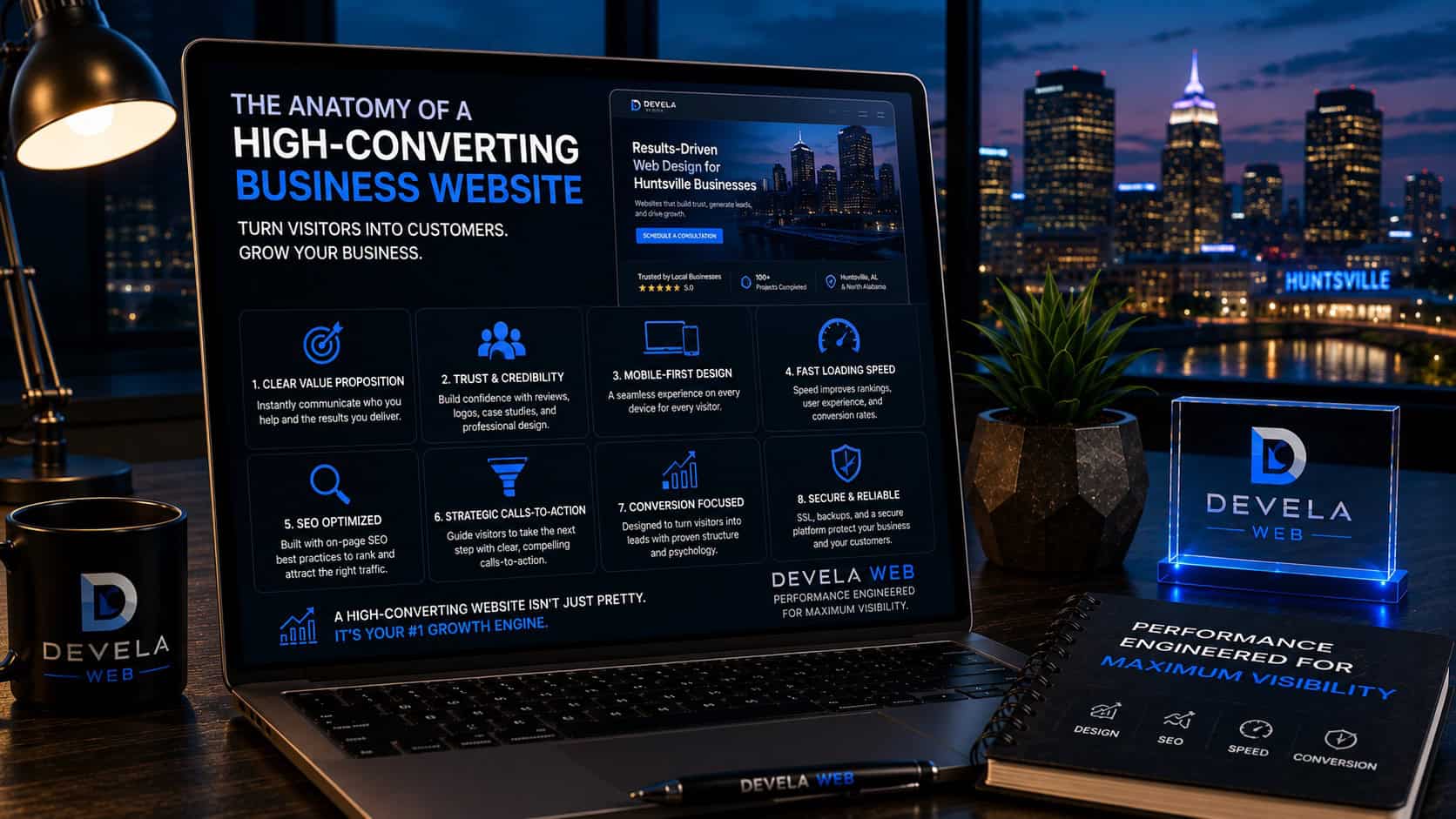
A high-converting business website makes the offer immediately clear, builds trust quickly, removes unnecessary friction, and guides the right visitor toward a specific action. Strong conversion performance usually depends on relevant messaging, focused page structure, persuasive proof, mobile-friendly design, fast loading, and simple contact or purchase paths.
Is This Guide Right for Your Website?
This guide is for Huntsville and North Alabama business owners whose websites receive traffic but generate too few calls, form submissions, bookings, purchases, or qualified sales conversations. It is also useful for companies planning a new website or redesign and wanting conversion strategy built into the project from the beginning.
What You’ll Learn
Clarify the Value Proposition
Show visitors what you offer, who it is for, and why it matters within seconds.
Build Trust Before Asking
Use reviews, proof, credentials, case studies, and clear expectations to reduce hesitation.
Create Strong Conversion Paths
Guide visitors toward the right next step with focused, relevant calls to action.
Reduce Friction
Simplify navigation, forms, mobile interactions, and decision-making across the site.
Improve Service-Page Persuasion
Answer customer questions, explain the process, and show why your business is credible.
Measure Real Results
Track qualified actions and business outcomes instead of relying on traffic alone.
What Website Conversion Really Means
A conversion happens when a visitor completes a meaningful action that moves the relationship forward. That action depends on the business, the page, and the visitor’s stage of decision-making.
For a service company, a conversion may be a phone call, consultation request, estimate form, appointment, or direct email. For ecommerce, it may be a purchase, add-to-cart action, or completed checkout. For a longer sales cycle, downloading a guide or requesting more information may be an appropriate first conversion.
A website should not force every visitor into the same action. Effective conversion design provides the right next step for someone who is ready now and a lower-pressure path for someone who still needs information or proof.
More conversions are not always better if they are low quality. The goal is to attract and convert the customers your business is equipped to serve profitably.
Make the Value Proposition Immediately Clear
Visitors should be able to understand what the business does, who it serves, and why they should continue reading without decoding vague marketing language.
Clarity usually converts better than cleverness when a visitor is trying to solve a real business or personal problem.
A strong opening should communicate
- The primary service or outcome offered
- The audience or market served
- The main reason the offer is valuable
- A clear next action for qualified visitors
- Enough proof to support the claim
Avoid opening with broad claims such as “innovative solutions” or “quality service” unless the page immediately explains what those phrases mean in practical terms.
Match Each Page to Visitor Intent
A homepage serves a broad audience. A service page, local landing page, pricing guide, and comparison article serve more specific needs. Conversion improves when the page answers the question that brought the visitor there.
Intent-focused page planning
Do not send every campaign, ad, email, or internal link to the homepage. Route visitors to the page that best matches what they are trying to accomplish.
Build Trust Before Asking for Action
Visitors evaluate risk before contacting a business. They want to know whether the company is legitimate, experienced, responsive, capable, and likely to deliver what it promises.
Trust signals that support conversion
- Specific customer reviews and testimonials
- Relevant project examples or case studies
- Professional team, office, or work photography
- Credentials, certifications, affiliations, or awards
- Clear contact details and business information
- Transparent process, expectations, and policies
Place proof near the claim or action it supports. A testimonial on a relevant service page is often more persuasive than a separate testimonials page that visitors may never open.
Create Persuasive, Complete Service Pages
Thin service pages force visitors to search elsewhere for answers. Strong service pages explain the problem, solution, process, benefits, audience, service area, proof, and next step.
A high-converting service page should include
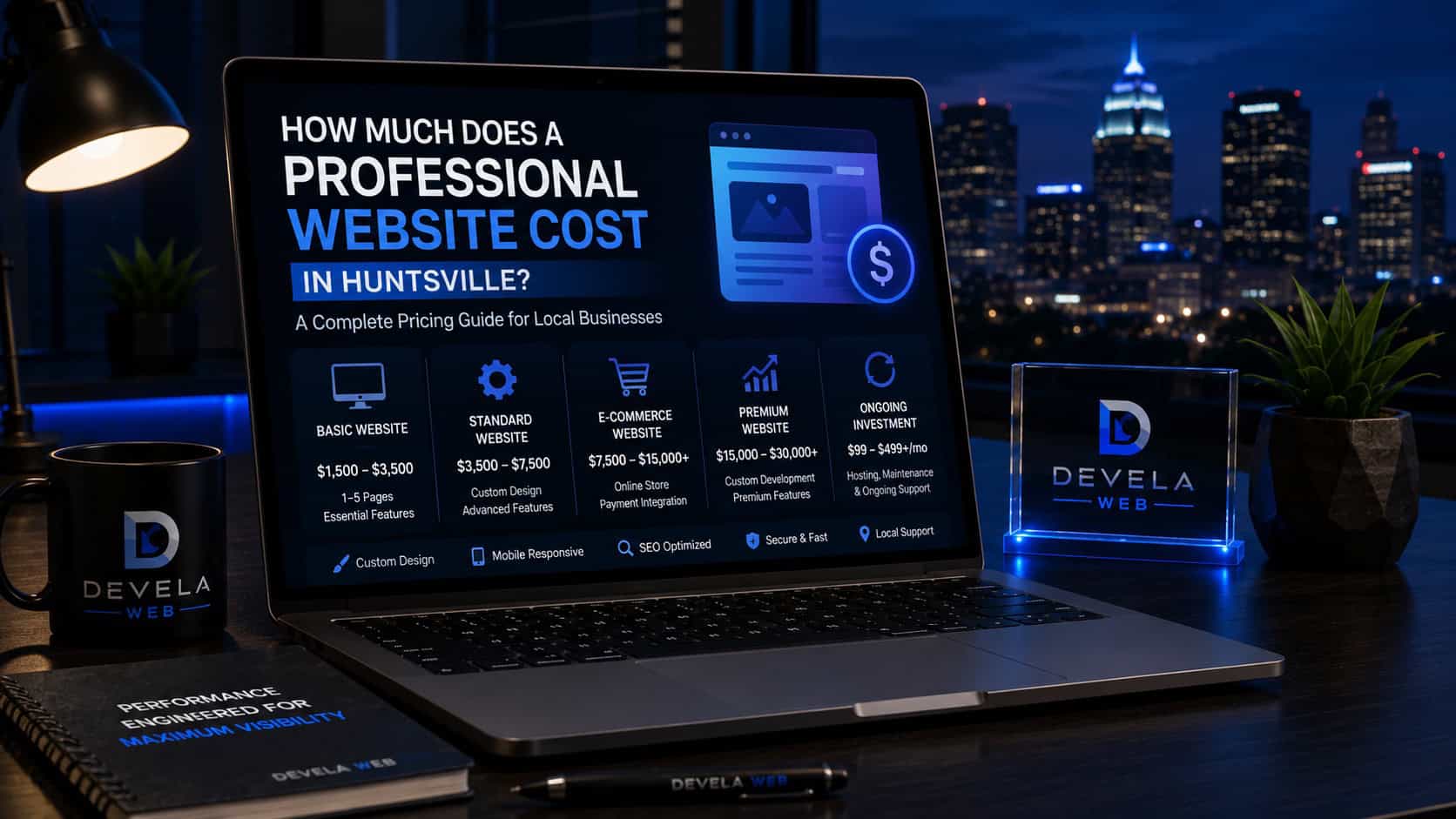
Focus on the customer’s decision, not only the provider’s internal terminology. Explain what changes for the customer after the service is completed. Businesses planning a new site can also review how much a professional website costs in Huntsville before comparing project proposals.
Build a Website Around Business Growth
Devela Web creates premium business websites with clear messaging, strategic page structure, mobile usability, SEO foundations, and conversion-focused design.
Explore Huntsville Web DesignUse Strong, Relevant Calls to Action
A call to action should tell visitors what happens next. Generic labels such as “Submit” or “Learn More” provide little context and can create hesitation.
Better call-to-action examples
- Request a Website Proposal
- Schedule a Consultation
- Get a Project Estimate
- View Website Design Services
- Explore SEO Audit Options
- Call for Availability
Use a consistent primary action across the site, then add secondary actions when they serve a different level of commitment. Avoid placing several equally prominent buttons beside one another.
Reduce Friction and Unnecessary Distraction
Friction includes anything that makes the visitor work harder, wait longer, feel uncertain, or make more decisions than necessary.
Common conversion barriers
- Complicated navigation with too many choices
- Forms that ask for information the business does not yet need
- Popups that interrupt reading or cover important content
- Vague pricing, process, ownership, or next-step information
- Distracting animation that competes with the offer
- Dead ends with no relevant next action
Do not add a design element only because it looks impressive. Every major section should support understanding, trust, navigation, or conversion.
Improve Mobile Speed and Usability
A visitor may be ready to call or request service but leave because the page loads slowly, text is difficult to read, or the form is frustrating on a phone.
Mobile conversion essentials
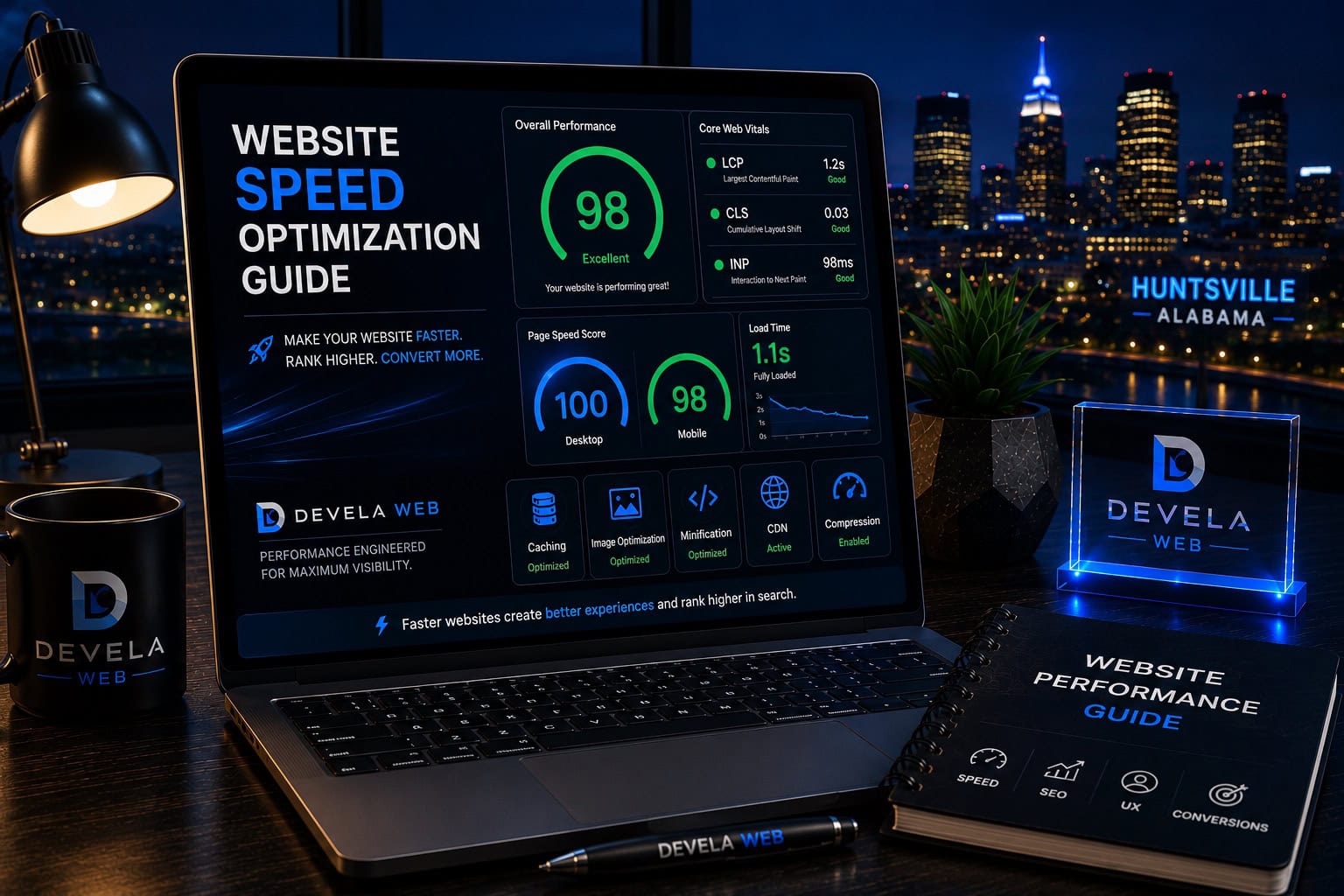
Our complete website speed optimization guide explains how hosting, images, caching, scripts, plugins, and mobile behavior affect usability, engagement, and conversion. Businesses needing implementation support can also explore our website speed optimization service .
Optimize Forms and Contact Paths
The contact experience should feel simple, trustworthy, and appropriate for the commitment being requested. A basic consultation form usually does not need twenty fields.
Form optimization principles
- Ask only for information needed to begin the conversation.
- Explain what will happen after submission.
- Use clear field labels and error messages.
- Confirm successful submission immediately.
- Test delivery and spam filtering regularly.
- Provide an alternate contact method when appropriate.
Track form starts and completions when possible. A form that receives many starts but few submissions may be too long, confusing, or technically unreliable.
Use Proof and Reduce Perceived Risk
Customers hesitate when they are uncertain about quality, price, process, timing, communication, or what happens if the project does not go as expected.
Conversion improves when the website answers the questions customers are afraid to ask before they contact the business.
Ways to reduce uncertainty
- Explain the process step by step.
- Show relevant examples and outcomes.
- Clarify who the service is and is not for.
- Provide realistic timing or availability expectations.
- Answer pricing questions as openly as the business model allows.
- Explain guarantees, policies, or next steps clearly.
Measure the Conversions That Matter
Traffic, impressions, and rankings provide useful context, but they do not reveal whether the website is producing business results.
Meaningful conversion indicators
Track performance by page and traffic source. A page with lower traffic but stronger lead quality may be more valuable than a popular article that generates no relevant inquiries.
A Practical Website Conversion Improvement Plan
Start with the most important customer journey rather than trying to optimize every page at once.
- Define the primary conversion for each important page.
- Clarify the offer, audience, and value proposition.
- Strengthen service-page content and proof.
- Improve calls to action and remove competing choices.
- Simplify forms, navigation, and mobile interactions.
- Fix speed, stability, and technical reliability issues.
- Track qualified calls, forms, bookings, and sales outcomes.
- Test one meaningful improvement at a time.
Build a Clearer Path From Visitor to Customer
Devela Web combines strategic messaging, premium design, SEO foundations, mobile usability, performance, and conversion-focused page planning.
Request a Website ProposalCommon Questions About Website Conversions
These are common questions business owners ask when trying to turn more website visitors into qualified leads and customers.
What is a good website conversion rate?
There is no universal rate because industries, traffic sources, offers, and conversion definitions differ. Compare performance over time, evaluate lead quality, and focus on whether the website is producing profitable business outcomes.
Why does my website get traffic but no leads?
The traffic may be poorly matched to the offer, or the site may lack clear messaging, proof, useful service information, strong calls to action, mobile usability, or a simple contact path. Analytics and page-level review can help identify the problem.
Do more calls to action increase conversions?
Not automatically. Repeating a clear primary action at logical points can help, but too many competing buttons can create confusion. Each call to action should match the page and visitor intent.
How important are testimonials for conversion?
Testimonials can be highly persuasive when they are specific, credible, relevant to the service, and placed near the claims they support. Generic praise without context is less useful.
Can website speed affect lead generation?
Yes. Slow loading and unstable pages create friction, especially on mobile devices. Visitors may leave before seeing the offer or completing a form, call, booking, or checkout.
Should I show pricing on my website?
It depends on the business model. Exact pricing, starting prices, project ranges, or explanations of cost factors can all reduce uncertainty. The website should provide enough information for qualified prospects to understand whether the offer is realistic for them.
When should I redesign for better conversions?
Consider a redesign when poor conversion is connected to outdated layouts, weak mobile usability, confusing architecture, difficult maintenance, thin content, inconsistent branding, or technical limitations that smaller changes cannot solve efficiently.

Devela Web Editorial Team
The Devela Web Editorial Team creates practical, research-based resources covering SEO, web design, WordPress, Google Business Profile optimization, website performance, and conversion-focused digital strategy for Huntsville and North Alabama businesses.
- Conversion-Focused Web Design
- Website Redesign Strategy
- Website Performance Optimization
- SEO-Focused Website Planning